Gulet Holiday: Turkey or the Greek Islands? An Honest Comparison
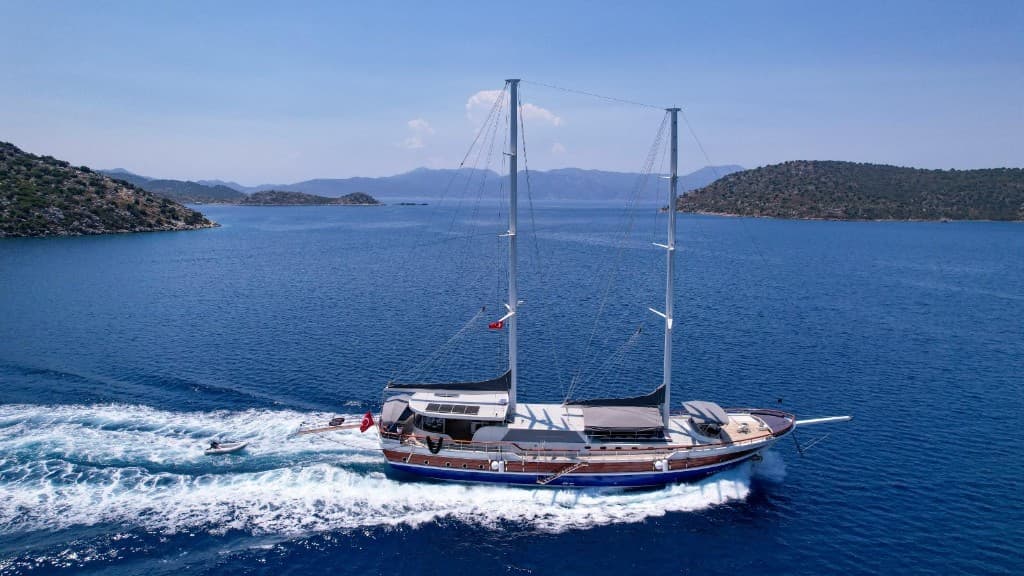
The short answer: if you want a traditional gulet and a slow week moving between sheltered bays, Turkey's south-west coast — Göcek, Fethiye, Marmaris and Bodrum — is where this kind of holiday was born. If your heart is set on a different island village every evening, look for a charter based in Greece. Neither is "better"; they are simply different holidays.
A word of transparency before we start: Dalibay Yachting is a charter company in Göcek, and our boats sail in Turkish waters only. We do not offer Greek itineraries or cross-border cruises. This guide is meant to help you choose, not to sell you the Greek islands from Turkey.
The Boat: Where the Gulet Comes From
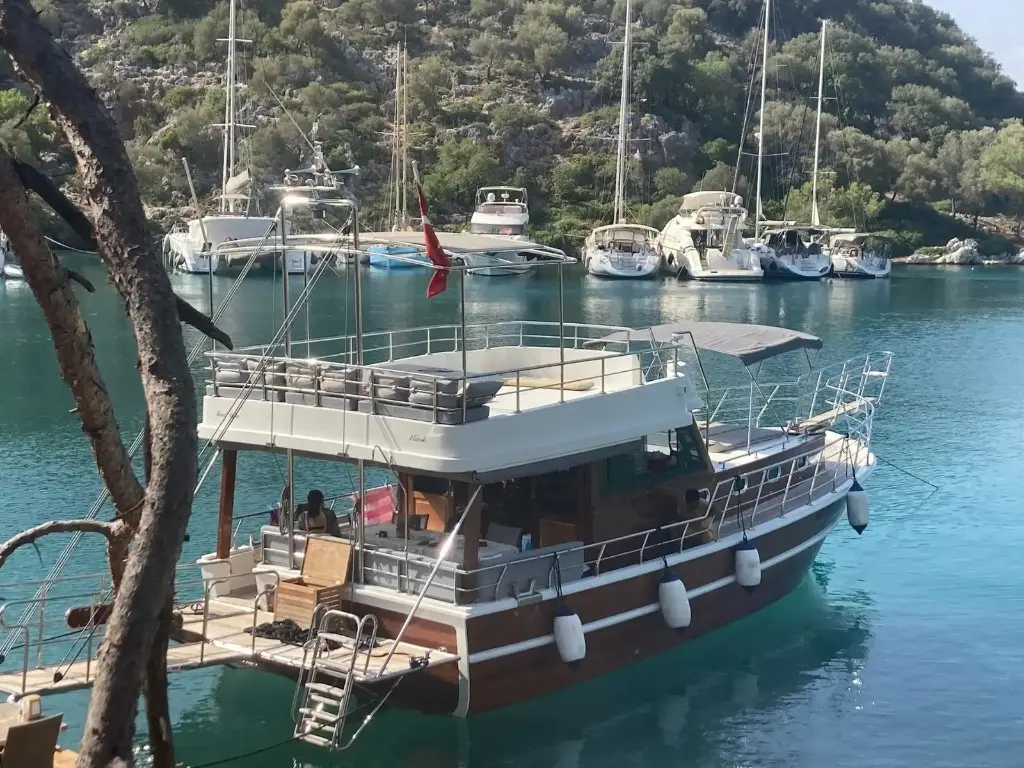
The gulet is a Turkish boat. The wooden, usually two-masted boat with its broad, rounded stern grew out of the boatyards of Bodrum and the surrounding coast, and "Bodrum Guleti" has been registered as a geographical indication with the Turkish Patent and Trademark Office since 2024. Gulets are still built mainly in Bodrum and Marmaris, and the very idea of a "blue cruise" — a week drifting from bay to bay on a gulet — is credited to the writer Cevat Şakir Kabaağaçlı, the Fisherman of Halicarnassus. You can read more in our guide What Is a Gulet?
On the Turkish coast the gulet is the classic boat for a crewed week. Our blue cruise page lists 53 gulets with 2 to 8 cabins, for 4 to 21 guests. You charter the whole boat with its captain and crew for your group alone; we do not sell individual cabins.
In Greece, charter platforms are organised mainly around sailing yachts, catamarans and motor yachts, offered both crewed and bareboat. If a traditional wooden gulet matters to you, check the boat type in every listing rather than assuming it.
The Coastline: Sheltered Bays or Island Hopping?
This is the biggest difference between the two holidays.
- Turkey: one mainland coast, deeply cut with bays, peninsulas and small islands. With its twelve islands and countless coves, the Gulf of Göcek is naturally protected from the wind and the sea is calm on most days; it is about 25 minutes from Dalaman Airport. Marmaris and the Bozburun Peninsula offer quieter, more remote bays, and Bodrum opens onto the Gulf of Gökova. Passages are short, so most of the day goes on swimming, lunch at anchor and quiet evenings in a cove.
- Greece: distinct island groups, each with its own character. Charter guides describe the Ionian (west of the mainland) and the Saronic Gulf (near Athens) as areas with short distances between islands. The Cyclades lie in the open Aegean, and the Dodecanese stretch along the coast of Anatolia, facing Turkey. The appeal is the variety of island harbours and villages; the trade-off is that some hops between islands cross open water.
Our article Göcek, Marmaris or Bodrum? compares the three Turkish departure areas in detail.
Wind: The Meltemi Blows on Both Sides
The meltemi (meltem in Turkish) is the dry northerly summer wind of the Aegean. It blows roughly from mid-May to mid-September, is strongest in the afternoon and often dies down at night, though it can sometimes last for days. At its strongest it reaches force 7–8 on the Beaufort scale.
The meltemi does not stop at a border, so the question is not "Greece or Turkey" but "which waters":
- Greek waters: charter guides describe the Cyclades as the most challenging area in summer, with the meltemi at its strongest in July and August, and the Dodecanese as windy in the same months. In the Saronic Gulf it is weaker, and the Ionian is largely sheltered from it.
- Turkish waters: the inner bays of Göcek are well protected. In Bodrum's Gulf of Gökova a steady afternoon breeze blows, which sailors love and which gives a gulet a gentle sway, while the Mazı and Kissebükü side stays calm even in July and August.
On a gulet, captains usually make longer passages in the calmer morning hours and spend the afternoon at anchor. The captain decides the route and anchorages for safety, as set out in our booking terms. If you are prone to seasickness, read our tips on seasickness; for the month-by-month picture, see when to go.
Costs: Compare What Is Included, Not Just the Headline Price
We will not tell you which country is cheaper: prices depend on the boat, the week and the terms. What we can say is that the structure of a quote often differs, so compare like with like.
Our prices in Turkey
- Prices are quoted in euros. In our catalogue, gulets have daily starting rates from €700 to €15,000 per boat; the weekly rate is seven times the daily rate, so weekly prices start at €4,900. Starting rates apply to the lowest season; the final amount is confirmed in your quote.
- Included on our gulets: captain and crew, port clearance and transit log, cleaning and fuel for the standard itinerary. Air conditioning is included for 6 hours a day on all our air-conditioned boats; longer use is charged extra.
- Not included: food and drinks (provisions), fuel outside the standard itinerary, private marina berths, anchorage and mooring fees in Turkish bays, fuel for motorised water sports, crew gratuities and transfers.
- Your quote states whether VAT is included. An advance for running costs (APA) is requested only if it is written in the quote, and we do not ask later for any charge that is not in the quote.
Month-by-month examples are in our gulet charter price guide, and the food side is explained in Food and Drink on a Gulet.
What to ask about a Greek charter
- Many crewed charters are quoted on a "plus expenses" basis: a base fee for the boat and crew, plus an advance (APA) for fuel, food, drinks and harbour fees. Charter industry guides put the APA at roughly 25–40% of the base weekly rate; unspent money is returned at the end.
- VAT on charters in Greece depends on the terms and the itinerary, so ask for the total including VAT.
- Greece uses the euro, so there is no currency question; in Turkey the local currency is the Turkish lira, but our charter prices are fixed in euros.
Formalities
- Turkey: citizens of the UK, the USA, Canada, Australia and most EU countries can visit Türkiye without a visa for up to 90 days (in most cases within any 180-day period). Your passport must be valid for at least 60 days beyond your stay — for a 90-day stay, 150 days from arrival. Some nationalities need an e-Visa, applied for online.
- Greece: Greece is part of the EU and the Schengen Area. UK travellers, for example, can stay up to 90 days in any 180-day period without a visa; the passport must have been issued less than 10 years before arrival and be valid for at least 3 months after you leave. The EU's new Entry/Exit System (EES) is being applied at Schengen borders.
- On board in Turkey: port clearance and the transit log are included in our price; we only need your guest details for the official guest list.
Entry rules change, so check your own government's travel advice before you book flights.
Which One Suits You?
- Choose Turkey if you want a traditional gulet, sheltered bays, short passages, a slow rhythm of swimming and long lunches — and a short transfer from Dalaman. It works especially well for families and first-timers.
- Choose Greece if visiting particular islands is the point of the trip, if you want a different harbour town most evenings, or if you prefer a sailing yacht or catamaran. In that case, book with a company whose boats are based in Greece.
Frequently Asked Questions
Can I sail from Turkey to the Greek islands with Dalibay?
No. Our boats operate only in Turkish waters, and we do not offer Greek itineraries or cross-border cruises. If the Greek islands are your goal, choose a charter based in Greece.
Is the meltemi stronger in Greece or in Turkey?
It depends on the area rather than the country. The open waters of the Cyclades are known for the strongest summer winds, while sheltered areas such as the Ionian in Greece and the inner bays of Göcek in Turkey are much calmer.
Can I book a single cabin on a gulet?
Not with us: we charter whole boats only, with captain and crew, for your group alone. How a weekly charter works step by step is explained in How Does a Weekly Gulet Charter Work?
Which airport should I fly into for a gulet holiday in Turkey?
Dalaman for Göcek, Fethiye and Marmaris, and Milas-Bodrum for Bodrum. See Dalaman Airport to Göcek for transfer options.
If a gulet week in Turkey sounds right for you, send us your dates and group size and we will reply with suitable boats and current prices: WhatsApp and contact. Or browse our yachts in Göcek.
Tags
Yachts Related to This Post
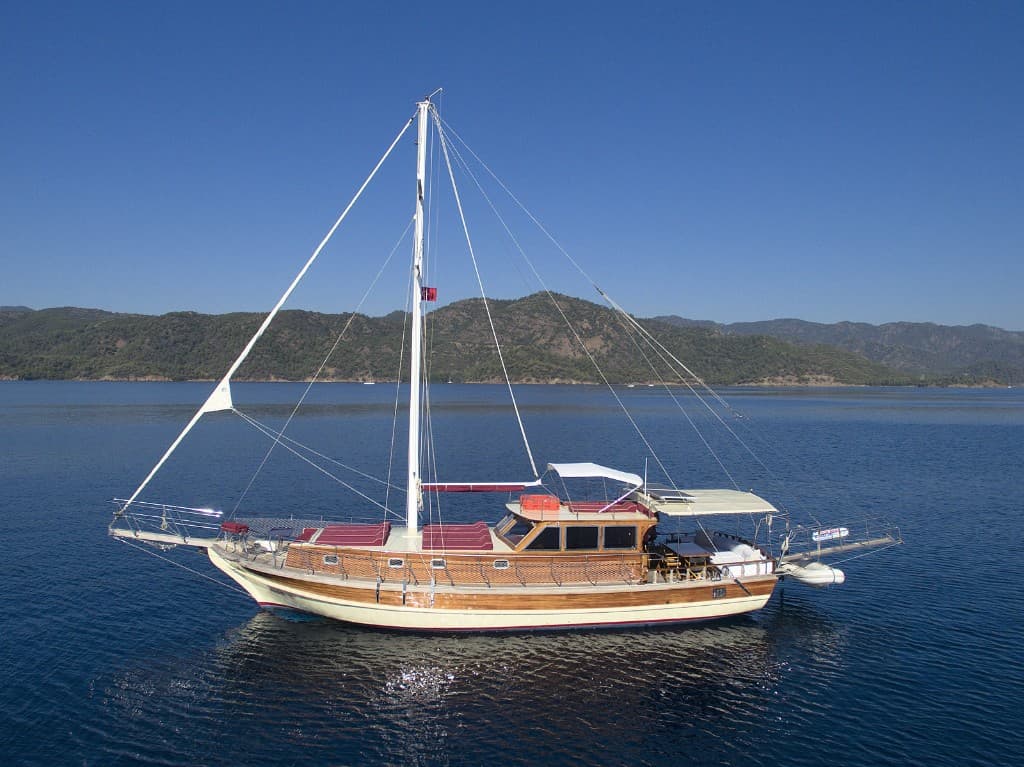
Akar H
Gulet · Göcek, Fethiye
3 cabins · 7 guests
Starting from €700 / day · €4,900 / week
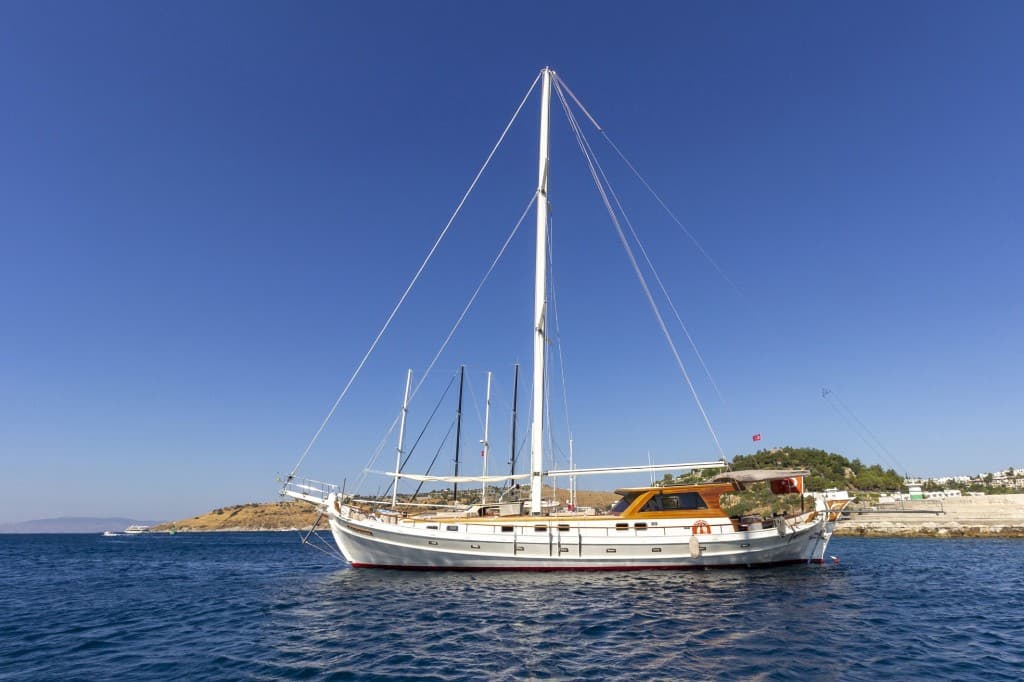
Mürvet Hanım
Gulet · Bodrum
3 cabins · 7 guests
Starting from €1,150 / day · €8,050 / week
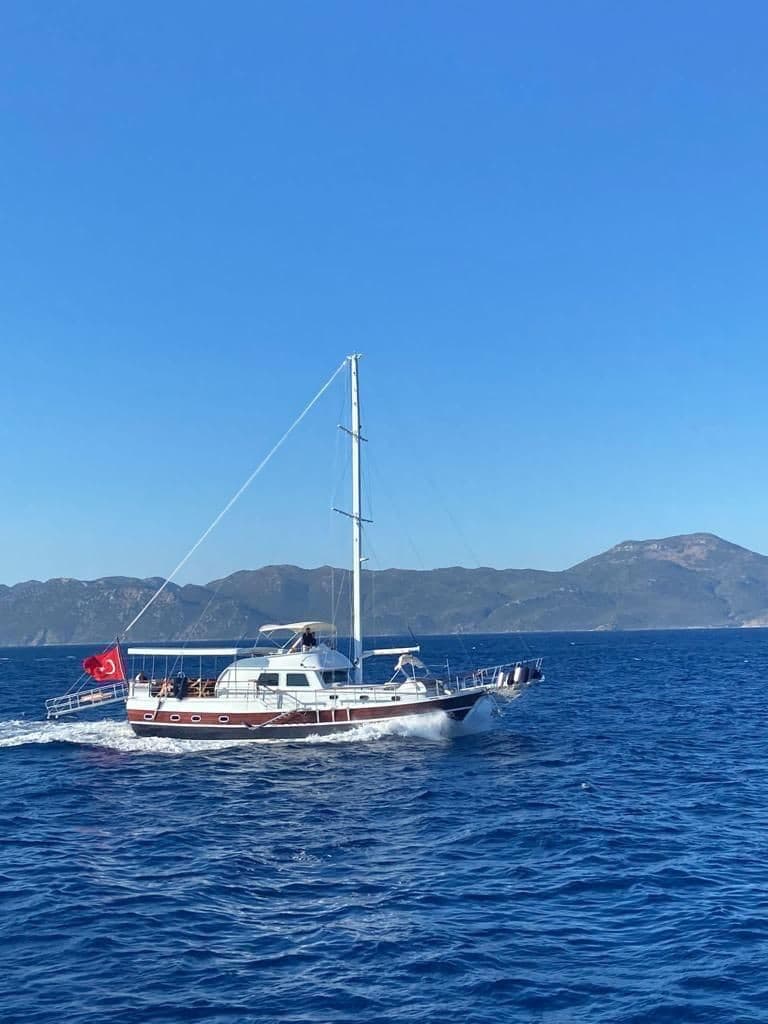
Güney Egeli
Gulet · Bozburun, Marmaris
4 cabins · 8 guests
Starting from €850 / day · €5,950 / week
Mehmet Kaptan
Gulet · Göcek, Fethiye
2 cabins · 4 guests
Starting from €700 / day · €4,900 / week