Seasickness, Non-Swimmers and What to Wear on a Gulet
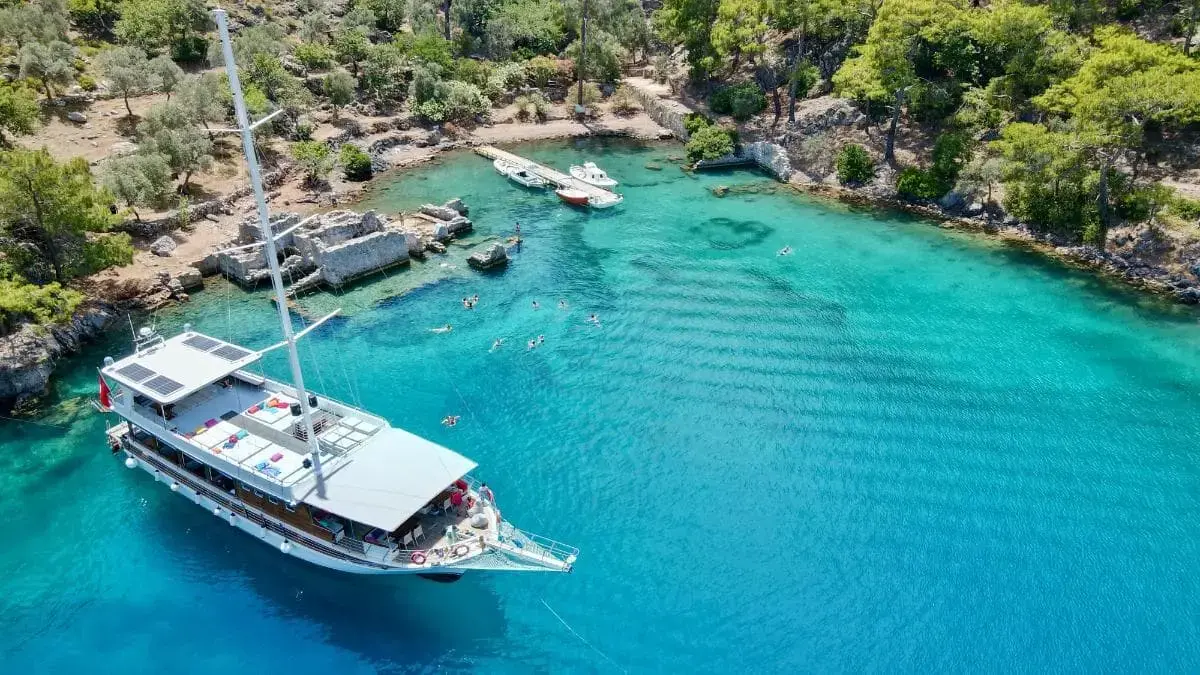
Not everyone gets seasick on a blue cruise: a gulet's heavy, stable hull and the sheltered coves of Göcek both lower the risk. If it does strike, sitting mid-boat in the fresh air, looking at the horizon and avoiding reading and alcohol usually help — and if you are considering medication, always check with your doctor or pharmacist. Non-swimmers can still enjoy the sea in a life jacket, and on board all you really need are light, sun-protective clothes and soft-soled shoes.
This article is general information, not medical advice. Please ask your doctor about anything related to your own health.
What Is Seasickness, and Who Is Most Prone to It?
Seasickness is a form of motion sickness. The most common symptoms are dizziness, nausea, vomiting, headache, feeling cold and pale, and sweating. For most people it eases once the motion stops or the body gets used to it.
According to the travel health guidance of the US Centers for Disease Control and Prevention (CDC), some people are more susceptible:
- Children: it is rare under the age of two; susceptibility rises with age, peaks at around 7–12 and then declines.
- Pregnant women: hormonal factors such as pregnancy can increase susceptibility.
- People with migraine, vertigo or inner-ear conditions.
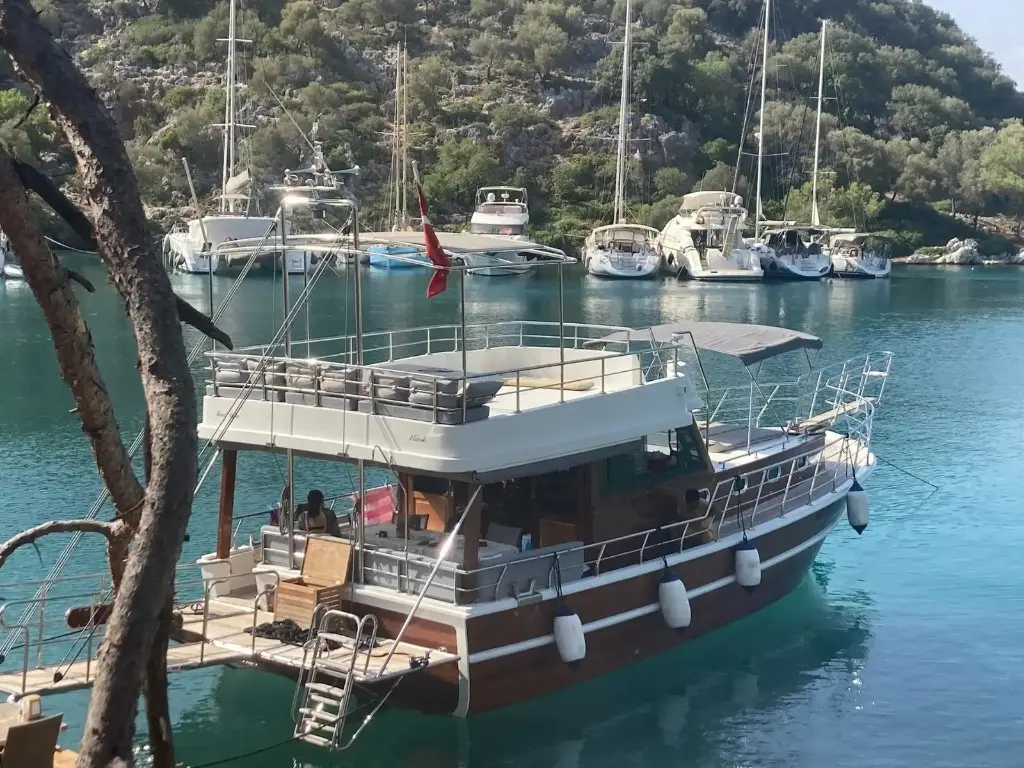
The good news: on a blue cruise, passages are usually short and most of the day is spent at anchor in a cove. A gulet is heavy and stable, so it rolls less than a fast boat. And because the inner coves of the Gulf of Göcek are ringed by islands and mountains, the water there is calmer than the open sea on most days. That's why we recommend the Göcek route to first-timers.
How to Reduce Seasickness on Board
- Pick the right spot: the middle of the boat moves least. Stay away from the bow, where motion is strongest.
- Watch the horizon: fix your eyes on a stable point such as the horizon, not on the waves or other moving things.
- Stay in the fresh air: sit on deck rather than in a closed cabin. Closing your eyes and breathing slowly also helps.
- Put the screens away: reading or looking at a phone or tablet while under way makes symptoms worse.
- Mind what you eat and drink: avoid heavy or spicy meals and alcohol just before and during passages. Smoking and lack of sleep make seasickness worse too.
- Tell the captain: let them know early that you are prone to seasickness. The captain decides on route and timing for safety, and longer passages can often be planned for calmer hours.
Ginger, Wristbands and Medication
Ginger (tablets, biscuits or tea) is worth a try, though the CDC notes that the evidence for it is weak and contradictory. Acupressure wristbands don't work for everyone and performed no better than placebo in laboratory trials — but if one makes you feel better, there is no harm in wearing it.
Pharmacies sell seasickness remedies as tablets and as skin patches. A few general points:
- Most medicines work best when taken before you set off, before symptoms start.
- Drowsiness is the most common side effect — worth bearing in mind if you will be driving or looking after children.
- Some medicines are not suitable for children, pregnant women, people with glaucoma or those taking other regular medication.
Always ask your doctor or pharmacist which medicine to take, how much and when. Never decide on your own for a child. Bring your medicine in its original packaging in your hand luggage — coves can be a long way from a pharmacy.
Can You Go on a Blue Cruise if You Can't Swim?
Absolutely. A blue cruise is about much more than swimming: sunbathing on deck, watching the coves go by and walking ashore are every bit as enjoyable. If you want to get in the water, these rules matter:
- Wear a life jacket: the CDC says life jackets reduce the risk of drowning while boating for people of all ages and swimming abilities, and weaker swimmers can use them in open water too. Ask the crew on day one where the life jackets are kept.
- Children always in a life jacket: children should wear one for all activities in and around open water, and a responsible adult should watch them closely and constantly. Check in advance that the boat has a life jacket in your child's size.
- Don't rely on inflatables: rings, armbands and lilos are not safety devices.
- No swimming after drinking: alcohol impairs judgement, balance and coordination.
- Use the ladder: get in and out using the boat's swim ladder. Remember there can be currents and waves, and follow the crew's advice.
The water in the coves is usually very clear; on rocky shores you may find sea urchins, and occasionally jellyfish. Water shoes are handy for that reason.
What to Wear on a Boat
- By day: swimwear with a light, pale T-shirt or long-sleeved shirt on top. Tightly woven fabric gives good sun protection.
- On your head: a wide-brimmed hat that shades your face, neck and ears, ideally with a strap for the wind.
- For your eyes: sunglasses with UV protection.
- On your feet: bare feet on deck, or non-slip soft-soled shoes. Hard soles and heels are not suitable on deck.
- In the evening: a light cardigan. In Fethiye, average night-time lows drop to around 13–15 °C in May and October.
Use sunscreen of at least SPF 30 with UVA protection and reapply every two hours and straight after every swim. Water reflects UV rays, so the sun is stronger on a boat — try to stay in the shade around midday. For the full packing list, see our gulet cruise checklist.
A Few Good Habits for Safety on Board
- Don't run on deck while under way, and keep one hand for the boat.
- Keep clear of lines and the anchor chain when mooring or setting off, and give the crew room to work.
- Accept that plans may change with the weather. The captain decides on route and anchorages for safety — see our booking terms.
FAQ
Will I get seasick on a gulet?
Not necessarily. A gulet is heavy and stable, passages are short and most of the day is spent in sheltered coves. If you are prone to it, sitting mid-boat in the fresh air and watching the horizon usually helps. Our gulet vs motor yacht comparison can also help you choose a boat.
When should I take seasickness medication?
Most medicines work best when taken before you set off. But the choice of medicine, the dose and the timing depend on the person, so always check with your doctor or pharmacist.
Do children get seasick?
They can — susceptibility peaks at around 7–12 years old. Distraction, looking at the horizon and fresh air all help. Always ask a doctor before giving a child medication.
Can a non-swimmer go on a blue cruise?
Yes. You can get in the water wearing a life jacket, using the boat's ladder, or simply enjoy the deck and the shore. Ask the crew on the first day where the life jackets are.
Can I go on a blue cruise while pregnant?
Make that decision with your doctor. Pregnancy can increase susceptibility to seasickness, and some medicines are not suitable during pregnancy.
Let us help you choose the right boat and the right time of year for a calm holiday: WhatsApp and contact. Sea and wind conditions month by month are in when to go on a blue cruise, and you can browse our gulets for charter in Göcek.
Tags
Yachts Related to This Post
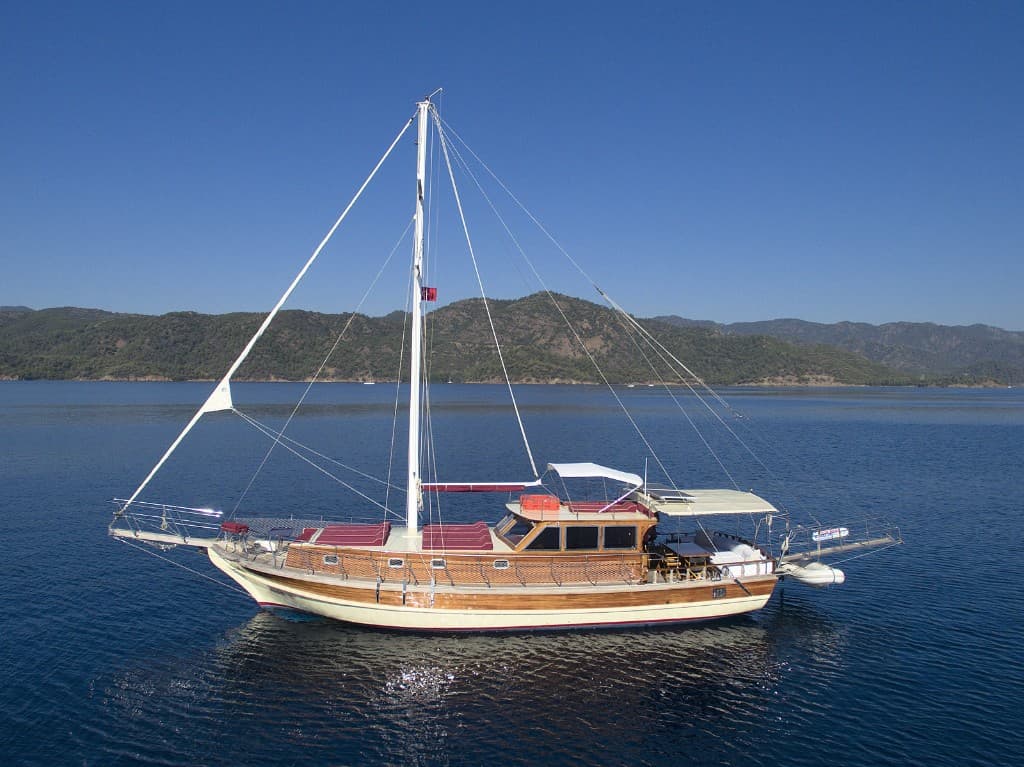
Akar H
Gulet · Göcek, Fethiye
3 cabins · 7 guests
Starting from €700 / day · €4,900 / week
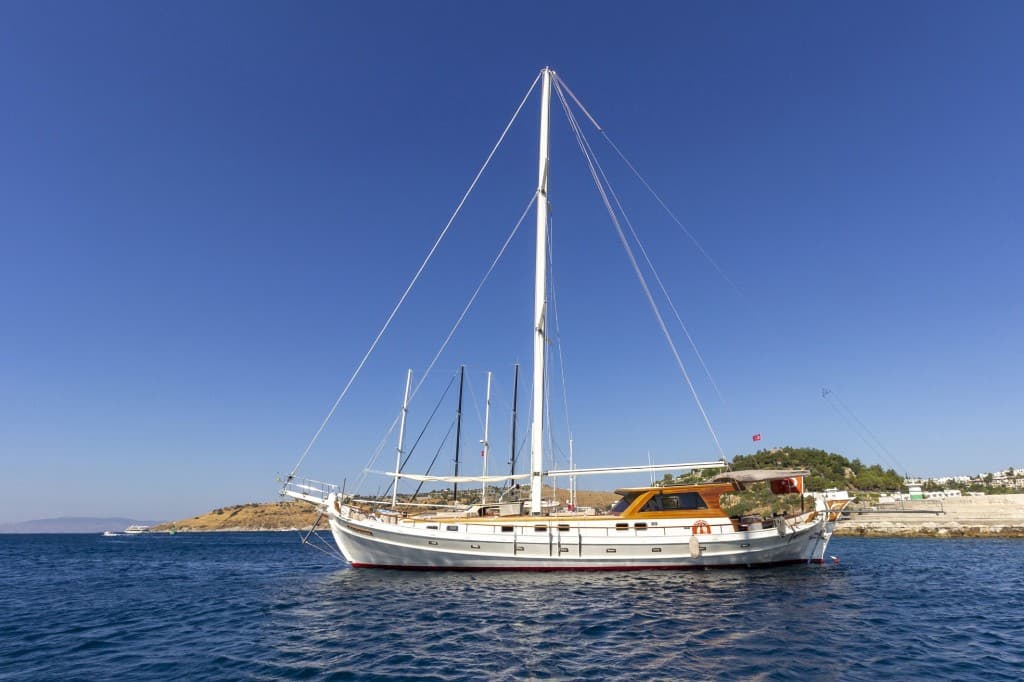
Mürvet Hanım
Gulet · Bodrum
3 cabins · 7 guests
Starting from €1,150 / day · €8,050 / week
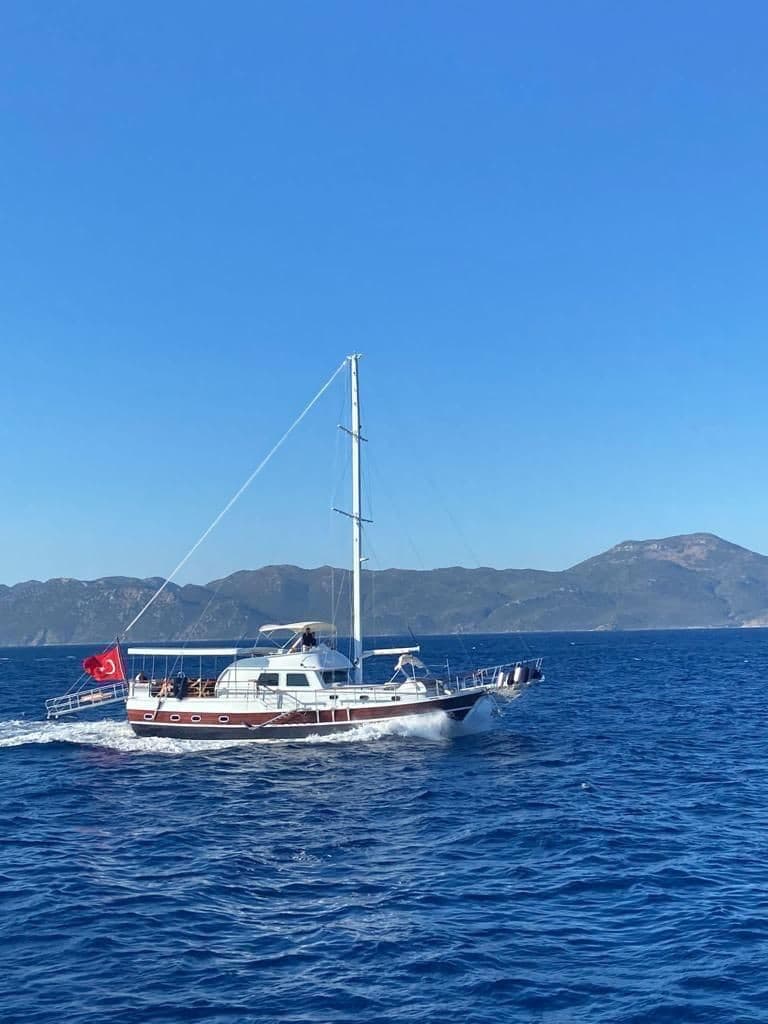
Güney Egeli
Gulet · Bozburun, Marmaris
4 cabins · 8 guests
Starting from €850 / day · €5,950 / week
Mehmet Kaptan
Gulet · Göcek, Fethiye
2 cabins · 4 guests
Starting from €700 / day · €4,900 / week