Kekova and Kaş by Gulet: The Sunken City Route on the Lycian Coast
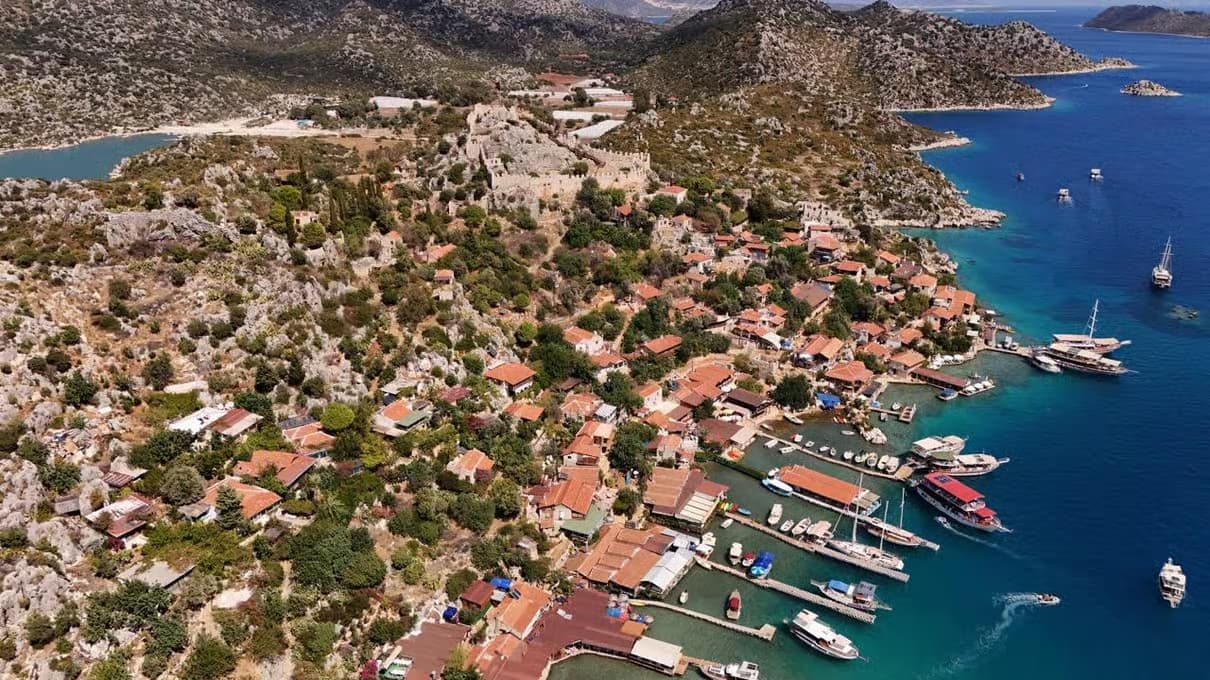
The short answer: Kekova is a protected stretch of the Lycian coast east of Kaş, where the ruins of ancient settlements lie partly under the sea. Boats glide slowly over the sunken city; swimming, diving and anchoring above the ruins are not allowed. Around it are the castle village of Simena (Kaleköy), the sheltered harbour of Üçağız and, further west, Kaş and Kalkan. From Göcek or Fethiye, adding Kekova stretches our classic 7-day programme to 10 days.
Where Is Kekova?
Kekova is not a single town but the name of an area, taken from the largest island in it. Kekova Island runs close along the mainland, forming a long strait, and together with the Sıçak Peninsula it encloses calm, almost lake-like water. The coastline is steep limestone that drops straight into the sea; there are no sandy beaches, and the coves are pebbly.
Since 1990 the coast from Ulu Burun, east of Kaş, to the Kale (Demre) plain beyond Cape Kekova has been protected as the Kaş–Kekova Special Environmental Protection Area, covering about 258 km². Kekova has also been on UNESCO's World Heritage Tentative List since 2000. Road access to much of this shore is limited, so it is mostly reached by boat.
The Sunken City: What You See and the Rules
The ancient settlements here were damaged by earthquakes in antiquity and partly sank. Along the shore you can make out stone steps leading into the water, Lycian sarcophagi standing in the shallows, a breakwater and the foundations of buildings. The calmer the day, the more you see from the deck.
- From the boat only: boats pass slowly over the ruins. To protect them, swimming, diving and anchoring above the sunken city are not allowed.
- Diving: in underwater protection zones, tourist and sport diving is only allowed at sites designated by the Ministry of Culture and Tourism. Approved sites are announced on the Ministry's website under a regulation of 20 March 2020. If you want to dive, ask a licensed dive centre where diving is currently permitted.
- Where to swim: there are plenty of coves nearby; your captain will choose the stop.
The protection covers nature too. According to the Ministry of Environment, around a thousand marine species have been recorded here since 2002, including the Mediterranean monk seal and loggerhead and green turtles, and the Posidonia seagrass meadows are fish nurseries that need protection from anchoring. If you spot a seal or a turtle, keep your distance.
Highlights Along the Route
Our Kaş–Kalkan–Kekova route page shows 28 stops on a map. These are the highlights.
Simena (Kaleköy)
Opposite Kekova Island, the village of Kaleköy stands on the site of ancient Simena, whose history goes back to at least the 4th century BC. A steep path with steps climbs between houses and sarcophagi to the medieval castle, which holds a small rock-cut theatre with seven rows of seats for about 300 people. On the shore are the remains of a Roman bath, and Lycian sarcophagi stand in the water.
Üçağız (Theimiussa)
Üçağız is a sheltered natural harbour. At the eastern edge of the village lie the remains of ancient Theimiussa: rock tombs, one with a Lycian inscription, and rows of Hellenistic and Roman sarcophagi.
Aperlai and Gökkaya
On the Sıçak Peninsula between Kaş and Kekova, at the head of a long, narrow cove, lies the small Lycian harbour town of Aperlai. Its walls and necropolis are on land, while its quay is now under water; the easiest way to get there is by sea. Nearby, Gökkaya Bay, set among small islets, is a classic stop for kayaking and snorkelling.
Kaş
Kaş stands on the site of ancient Antiphellos. Its Hellenistic theatre has 26 rows of seats facing the sea, and the 4th-century BC Lycian sarcophagus known as the King's Tomb stands on Uzun Çarşı Street in the town centre. Kaş is also a diving centre: the Ministry of Environment counts 28 dive sites around Kaş, led by Beş Adalar and Kanyon. A dive stop can be added to your itinerary.
Kalkan, Fırnaz Bay and Kaputaş
West of Kaş, Kalkan is a former fishing town that was called Kalamaki until the 1920s. Its harbour offers shelter on the open coast between Fethiye and Kaş, and nearby Fırnaz Bay and Kaputaş Beach are the turquoise classics of the route.
Can a Week from Göcek or Fethiye Reach Kekova?
Kekova lies well east of the Gulf of Fethiye, beyond Kalkan and Kaş, so the passages are much longer than on a classic Göcek week. On the way, the coast between Ölüdeniz and Patara, known as the Seven Capes (Yedi Burun), is open to the prevailing north-westerly wind, which can make the sea choppy near the headlands. That is why captains usually make long passages in the morning.
- Adding Kekova to a Göcek or Fethiye week: this route can be added to a 7-day Göcek/Fethiye programme. In our 7-day Göcek itinerary, the Kekova extension stretches the programme to 10 days.
- Starting or ending elsewhere: our route page mentions a shorter cruise from Kaş as an option, but no yachts in our catalogue are currently based in the Kaş–Kalkan–Kekova area. If you would like to start or finish in Kaş, or sail one way, mention it in your quote request; whether it works depends on the boat's schedule.
- Fuel: fuel for the standard itinerary is included, fuel outside it is not. On longer routes such as Kaş–Kekova a fuel surcharge may apply, and your quote shows it.
- Speed: a motor yacht covers the distance faster than a gulet; our gulet vs motor yacht comparison helps you choose.
How a 10-Day Plan Could Look
- Days 1–3: the sheltered bays of Göcek and the Gulf of Fethiye (see our Fethiye boat routes).
- Day 4: a morning passage past the Seven Capes to Kalkan, with a swim in Fırnaz Bay.
- Day 5: Kaputaş and Kaş, with an evening in town or a dive stop.
- Days 6–7: Aperlai, Gökkaya, the sunken city, Simena and Üçağız.
- Days 8–10: back west, stopping in the bays of Fethiye and Göcek.
This is an example, not a timetable: the captain decides the route and anchorages according to the wind and sea.
When to Go
The season runs from May to October, and June and September are the most pleasant months. According to the Turkish State Meteorological Service (MGM), the long-term average sea temperature on Turkey's Mediterranean coast is about 24 °C in June and 27 °C in September. July and August bring the warmest water but also the busiest coves: the Ministry of Environment notes that the population of the protected area can double or triple in summer. Air conditioning is included for 6 hours a day on all our air-conditioned boats. Our month-by-month guide, the best time for a blue cruise, also explains the meltemi, the summer wind that usually builds in the afternoon.
Practical Notes
- Whole boat: the yacht is chartered as a whole for your group, with captain and crew; see how a weekly gulet charter works.
- Fees: applicable anchorage and mooring fees for islands and bays are not included in the charter price.
- Safety: what happens if the harbour master suspends sailing is set out in our booking terms.
- Seasickness: the open-sea passages are longer than in Göcek; see our seasickness tips.
Frequently Asked Questions
Can you swim over the Kekova sunken city?
No. Boats pass slowly over the ruins, and swimming, diving and anchoring above them are not allowed. You can swim in the nearby coves your captain chooses.
Can a 7-day gulet cruise from Göcek reach Kekova?
It is a long way for a single week. In our itinerary, adding Kekova stretches the programme to 10 days; a motor yacht covers the distance faster.
Do you have boats departing from Kaş?
No yachts in our catalogue are currently based in Kaş, Kalkan or Kekova. If you would like to start or finish there, mention it in your quote request.
Send us your dates, group size and the stops you would like to see, and we will prepare a quote with a suitable boat and route: WhatsApp and contact. To browse boats, see our gulets and motor yachts departing from Göcek and Fethiye.
Tags
Yachts Related to This Post
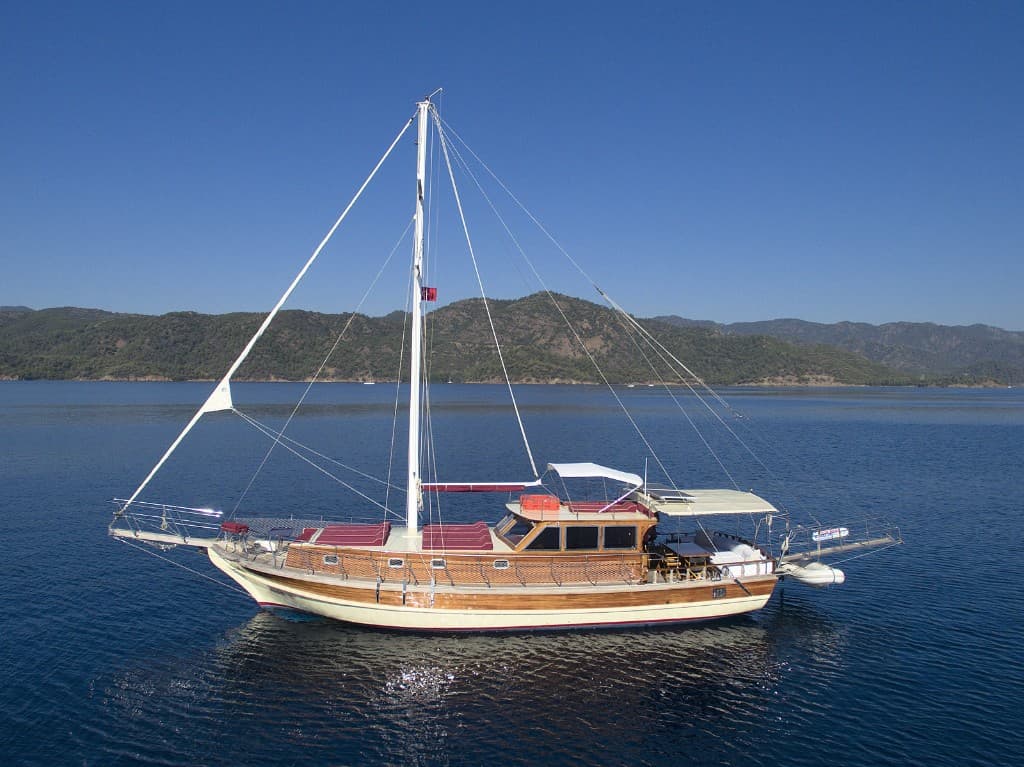
Akar H
Gulet · Göcek, Fethiye
3 cabins · 7 guests
Starting from €700 / day · €4,900 / week
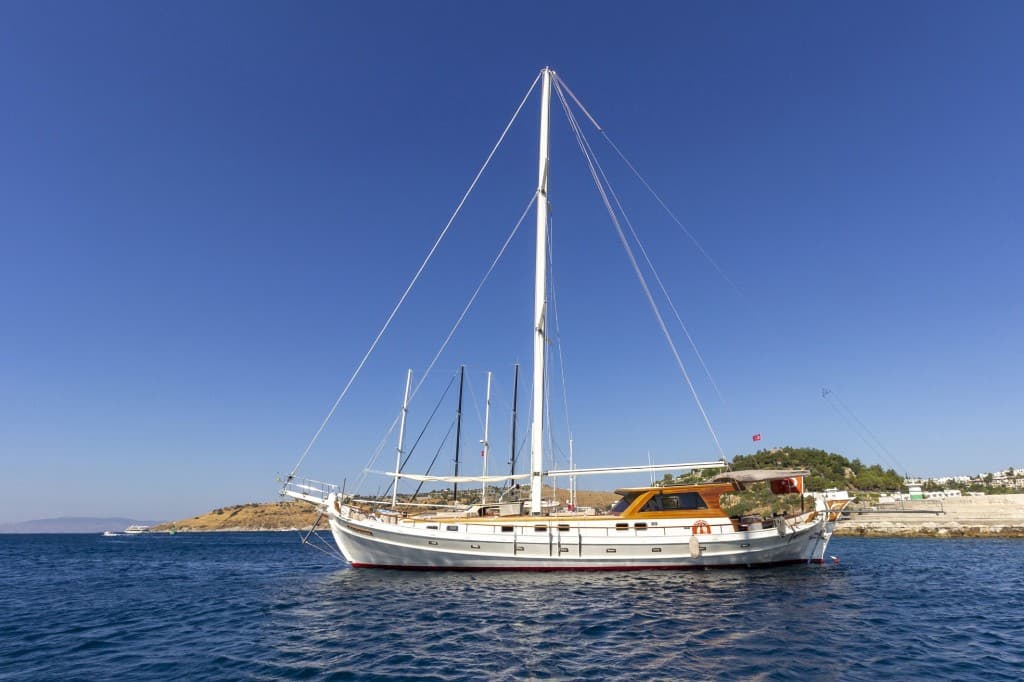
Mürvet Hanım
Gulet · Bodrum
3 cabins · 7 guests
Starting from €1,150 / day · €8,050 / week
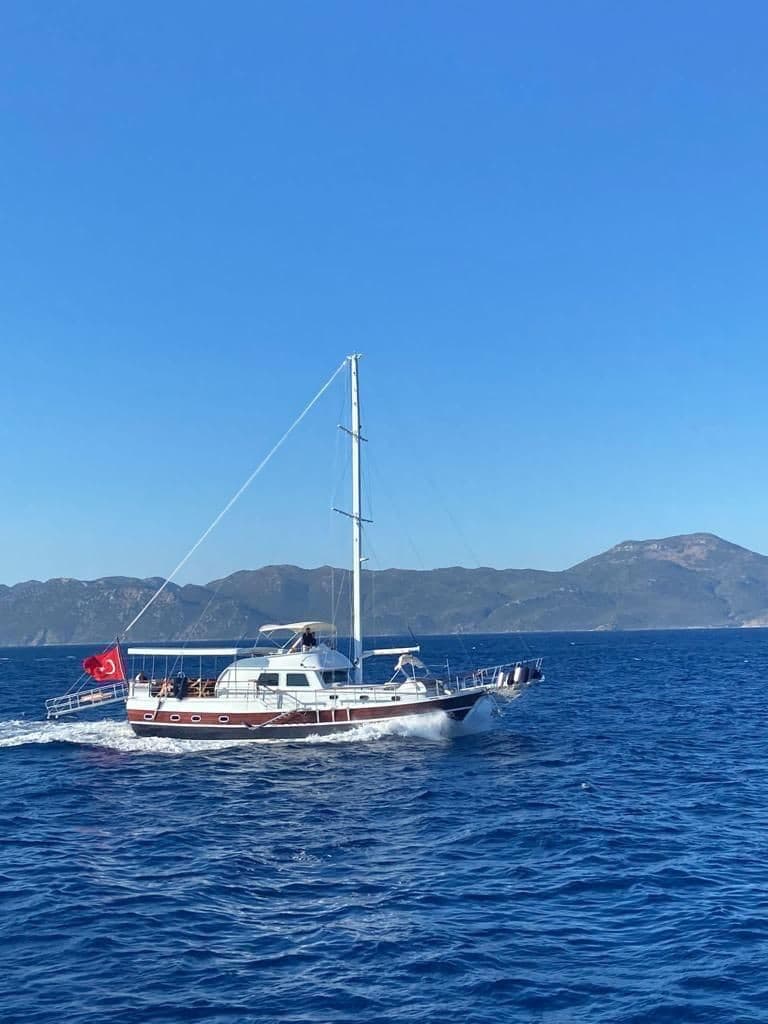
Güney Egeli
Gulet · Bozburun, Marmaris
4 cabins · 8 guests
Starting from €850 / day · €5,950 / week
Mehmet Kaptan
Gulet · Göcek, Fethiye
2 cabins · 4 guests
Starting from €700 / day · €4,900 / week